Recycling and Sustainability — Commercial Waste Removal Waltham Forest
Commercial Waste Removal Waltham Forest is committed to delivering practical, measurable and local solutions for eco-friendly waste disposal and sustainable rubbish management across the borough. Our approach balances operational efficiency with clear environmental targets so that businesses can reduce landfill, increase reuse and contribute to a thriving circular economy. By working with local partners and investing in greener vehicles, we make it easy for companies to adopt responsible commercial waste services in Waltham Forest.
Our recycling percentage target
We have set a clear ambition to reach a 70% recycling and recovery rate for commercial waste streams by 2030, with interim milestones of 55% by 2026. This target focuses on diverting paper, cardboard, glass, metals, plastics and organic food waste away from landfill and into reuse or high-quality recycling streams. Targets are tracked through regular reporting and verified transfers to licensed facilities to ensure transparency.
How we align with the borough's approach to waste separation
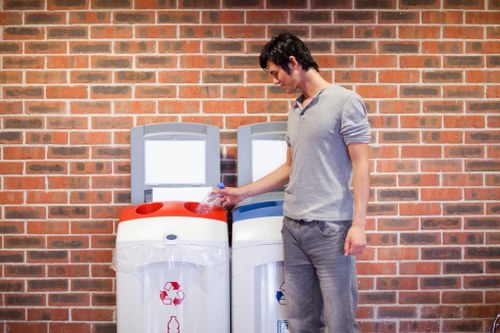
Our collections reflect the borough's emphasis on segregation at source: clear separation of dry recyclables, glass, mixed packaging, and food or compostable waste. We provide tailored containerisation and signage for buildings and estates so staff and visitors can easily follow separation guidance. Typical recycling activities we support include:- Source segregation of paper, cardboard and mixed packaging
- Separate glass and metal collection for high-quality processing
- Food waste capture and anaerobic digestion for energy recovery
- Dedicated routes for hazardous or specialist waste streams
Local transfer stations and processing
We transport sorted loads to local transfer stations serving north-east London and the borough, such as Edmonton transfer facilities and other nearby London transfer sites, where materials are consolidated and moved to accredited processors. By minimising double-handling and choosing transfer stations close to collection zones we reduce vehicle miles and emissions. All transfers are accompanied by waste transfer documentation and material recovery reports to meet regulatory requirements.
Partnerships with charities and community reuse
We place a strong emphasis on reuse before recycling. Partnerships with local charities, social enterprises and community reuse centres mean usable furniture, working electronics and textiles can be redirected to people and projects across Waltham Forest. These partnerships support local employment and social value while preventing otherwise reusable items from being processed as waste. Typical charity-led recycling initiatives we support include furniture refurbishment, clothing banks and IT refurbishment schemes.Low-carbon vans and greener operations
Our fleet strategy embraces low-carbon logistics to make commercial waste removal in Waltham Forest genuinely sustainable. We operate a growing number of electric and hybrid vans for urban collections, supplementing them with route optimisation software and telematics to minimise idle time and unnecessary mileage. Other measures include:- Electric and low-emission vehicles for frequent urban routes
- Use of cargo bikes and consolidated collection points for dense town centres
- Driver training in eco-driving and load planning
Auditing, reporting and continuous improvement
We provide businesses with clear waste audits and bespoke action plans that identify opportunities to increase recycling rates, reduce residual waste, and optimise packaging. Regular reporting includes diversion rates, tonnages by material type and carbon savings attributed to low-carbon vehicles and improved routes. Where appropriate we support customers in achieving environmental standards such as ISO 14001 alignment or internal sustainability KPIs.
Benefits for local businesses and the borough
Adopting sustainable rubbish collection deliverables for your organisation provides measurable benefits:- Cost control — lower disposal fees through higher recycling and reuse rates
- Compliance — proper documentation and transfer records
- Reputation — demonstrable social and environmental value through charity partnerships
- Carbon reduction — fewer vehicle miles and low-emission collections