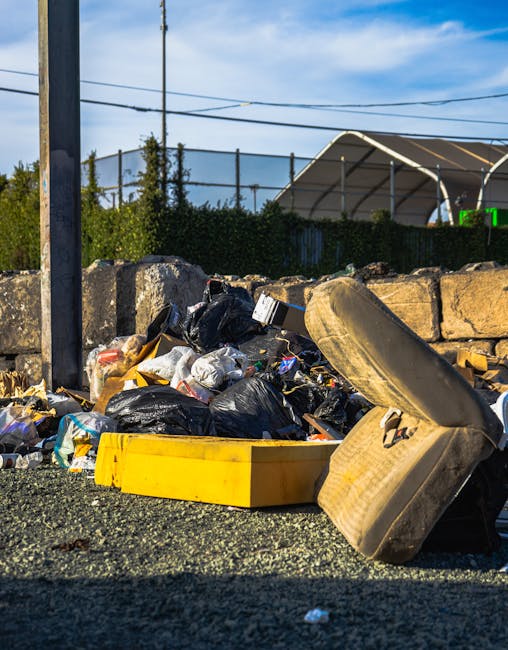
Waltham Forest rubbish removal near Walthamstow Market: a practical local guide
If you are trying to clear clutter, old furniture, builder's rubble, or a full flat's worth of waste, Waltham Forest rubbish removal near Walthamstow Market is one of those jobs that feels simple until you are halfway through it. Suddenly there are bags by the door, a broken wardrobe in the hallway, and not enough time, not enough space, and definitely not enough patience. We get it.
This guide explains how rubbish removal works in the Walthamstow Market area, what to expect from a proper clearance service, how to choose the right method, and how to avoid the sort of mistakes that lead to extra cost or hassle. It is written for homeowners, landlords, tenants, shopkeepers, office managers, and anyone else who just wants the mess gone without drama.
Along the way, we will also cover compliance, practical preparation, what can usually be taken, and when it makes sense to use a specialist service such as general waste removal, furniture disposal, or builders waste clearance.
Why Waltham Forest rubbish removal near Walthamstow Market matters
Walthamstow Market is busy, lively, and very much a place where things are happening all the time. That is part of the charm. It is also why rubbish removal in this part of Waltham Forest needs a bit of thought. Narrow streets, loading pressure, pedestrians, shopfronts, flats above commercial units, and the general ebb and flow of London life all make waste clearance more sensitive than it might be in a quieter suburb.
Let's face it: leaving waste outside "just for a bit" is rarely a good plan. In a busy area it can block access, attract attention, and create the sort of awkward situation where a small job becomes a bigger one. A reliable clearance approach helps you deal with waste quickly, keep things tidy, and avoid turning your front step into a temporary tip.
It also matters because rubbish is not all the same. A bag of household clutter is very different from plasterboard, a fridge, old office chairs, or damp garden cuttings. Each type needs the right handling, and sometimes the right paperwork or disposal route. That is where a professional service can make life much easier.
Expert summary: In busy local areas like Walthamstow Market, good rubbish removal is about more than collection. It is about access, timing, segregation, safe handling, and getting the right waste to the right place without unnecessary delay.
How Waltham Forest rubbish removal near Walthamstow Market works
The process is usually straightforward, though the exact approach depends on the amount and type of waste. In most cases, a team arrives, assesses what needs taking, loads it safely, and removes it in one visit. The key is planning, especially in a busy local setting where parking and access can be tight.
Many people use rubbish removal when they want a faster and less disruptive alternative to a skip. That can be especially helpful near the market, where space is limited and you may not want a large container sitting outside for days. If you want to understand what can go where, the guide on what can go in a skip is useful background, even if you end up choosing a different removal method.
A standard collection often looks like this:
- You describe the waste - photos help a lot, especially for mixed loads.
- You get a price or estimate - usually based on volume, waste type, labour, and access.
- A collection time is arranged - often with a window that fits around traffic and loading limits.
- The team loads the waste - carefully, so nothing gets damaged on the way out.
- The waste is taken for sorting, recycling, or disposal - ideally with as much diverted from landfill as possible.
In a residential setting, the job may take ten minutes or an hour. In a commercial setting, or where there are bulky items like wardrobes, mattresses, and broken appliances, it can take longer. The important thing is that the method should fit the mess, not the other way around.
If your waste is mostly household items, a home clearance service may suit you better. For larger property clear-outs, you might lean towards house clearance or flat clearance. Small detail, but it matters. The right label usually means the right team, the right vehicle, and fewer surprises.
Key benefits and practical advantages
There is a reason people search for rubbish removal near Walthamstow Market instead of trying to handle every bag themselves. The main benefit is not just convenience - it is reduced stress. But there are several practical advantages worth knowing.
- Speed: A clearance team can often remove a mixed load far faster than a DIY trip to a disposal site.
- Less disruption: Especially useful where stairs, lifts, tight access, or customer footfall are involved.
- Safer handling: Heavy, sharp, dusty, or awkward items are much easier to manage with help.
- Better sorting: Reputable operators separate recyclables and dispose of waste properly.
- Flexibility: Services can often be tailored for furniture, appliances, garden waste, or builders debris.
- Cleaner result: You finish with a clear room, yard, or premises rather than a half-cleared corner and a headache.
There is also a financial angle, even if it is not always obvious at first. When you add up van hire, fuel, time off work, parking hassle, and the possibility of multiple trips, a professional collection can end up feeling like the sensible choice. Not always, but often enough to make the maths interesting.
For certain items, specialist disposal matters too. Old white goods may need separate handling, which is why pages like fridge and appliance removal exist. Soft furnishings and mattresses are another common headache, so it helps to know there is a dedicated route such as mattress and sofa disposal.
Who this is for and when it makes sense
Rubbish removal near Walthamstow Market is not just for people with a renovation project on the go. Truth be told, it suits far more everyday situations than most people expect.
You might need it if you are:
- moving out of a flat and need a fast clear-down
- refreshing a rental property between tenants
- clearing a shop stockroom or back office
- getting rid of old furniture after a delivery upgrade
- sorting out post-refurbishment rubble or packaging
- emptying a garage, loft, or shed that has become, well, a bit of everything
- dealing with garden cuttings after a big tidy-up
For landlords and agents, timing matters because void periods are expensive. For shop owners, it is usually about keeping the space presentable and workable. For households, it is often about reclaiming a room that has slowly become a storage unit. And for some people, it is simply about getting rid of the old treadmill, broken cabinet, and two boxes of "I'll deal with that later". We all have a version of that box.
If you are clearing a work space or managing recurring waste from a business, business waste removal or office clearance may be more relevant than one-off rubbish collection. That distinction saves time and usually leads to better pricing and planning.
Step-by-step guidance
If you want a smooth collection, a little preparation goes a long way. Here is a practical process that works well in real life.
1. Separate the waste by type
Try to group furniture, general rubbish, cardboard, garden waste, appliances, and anything potentially hazardous. Even a basic split helps the team quote more accurately and load more efficiently.
2. Check access before booking
Near Walthamstow Market, access can be the deciding factor. Ask yourself: can a vehicle stop nearby, are there stairs, is there lift access, will the load need carrying through a shop or communal hallway? The clearer you are upfront, the better.
3. Take photos
It sounds obvious, but photos reduce back-and-forth. A quick picture of the room, the pile, or the items in question makes estimates more accurate and avoids awkward "oh, there was a bit more than we thought" moments.
4. Flag awkward or restricted items
Some waste needs special handling. Chemicals, paint, certain electricals, or damaged items with sharp edges should be mentioned early. If the load includes something you are unsure about, ask before collection rather than after the van is already outside.
5. Make the area safe and accessible
Move pets, clear a route, and keep fragile items away from the load. If you can, leave the most obvious items nearest the exit. It is a small thing, but it really does help.
6. Confirm what will happen to the waste
A trustworthy operator should be able to explain how items are handled after collection. Not every item can be recycled, but responsible sorting and lawful disposal are part of good practice.
Expert tips for better results
In our experience, the best rubbish removal jobs are the ones where the client gives just enough detail without overcomplicating things. Clear, simple information is gold. A few extra minutes at the start can save a lot later.
- Book for the right time of day. If loading access is easier before peak footfall, say so. Morning slots can be less stressful near busy streets.
- Be honest about volume. Underestimating the amount of waste is the quickest route to disappointment. It happens more often than people admit.
- Keep hazardous items separate. Do not quietly mix them into general waste. That is where things can get messy, both practically and legally.
- Ask about recycling. A good provider should have a sensible recycling and sorting process, not a vague shrug.
- Use the right service page for the job. A wardrobe problem is not a garden waste problem. It sounds simple, but the right match matters.
Also, if you are clearing a loft or a garage, do it with a bit of structure. Start with obvious rubbish, then keep, then maybe, then absolutely-not. That last category is often smaller than it feels while you are standing in the dust at 7:30 in the evening.
For heavy or awkward items, specialist options such as furniture clearance, garage clearance, or loft clearance can reduce labour time and make the job much safer.
Common mistakes to avoid
Rubbish removal looks simple from the outside. The same is true of plumbing, and we all know how that usually goes. A few common mistakes keep cropping up.
- Leaving booking too late: Especially risky before a move, tenant handover, or trade deadline.
- Guessing on waste type: Mixed loads can change how the job is handled and priced.
- Ignoring access issues: A second-floor flat with no lift is a very different job from a ground-floor pickup.
- Assuming everything is recyclable: Not all materials can be recovered, and some need careful sorting first.
- Mixing prohibited items with general rubbish: This can cause collection delays or refusal.
- Using a one-size-fits-all approach: Garden waste, office waste, and construction waste each have different needs.
Another surprisingly common issue is the "I only have a few things" problem. Then the team arrives and finds a lot more than a few things. That does not help anyone. Better to over-explain than under-explain.
If the job is tied to a refurbishment, check whether the waste is mainly rubble, timber, plasterboard, packaging, or mixed building debris. For that type of work, builders waste clearance is often the more appropriate route.
Tools, resources and recommendations
You do not need special equipment for most clearances, but a few basic tools and habits make the process easier.
- Bin bags and boxes: Useful for sorting small loose items before collection.
- Gloves: Handy if you are moving items yourself before the team arrives.
- Tape or labels: Good for marking keep, remove, or fragile items in mixed rooms.
- Phone photos: Probably the most useful "tool" of all for quoting and planning.
- Clear notes: Write down anything special, such as restricted access, shared entrances, or parking restrictions.
For people who want a more structured route, the website's pricing and quotes page is a sensible next stop. It helps set expectations before you book. If your main concern is safety, check the pages covering insurance and safety and the health and safety policy. Those details matter more than people think, especially for larger clear-outs.
And if sustainability is on your mind - which it probably should be - take a look at the approach to recycling and sustainability. A well-run waste service should be aiming to recover and separate wherever reasonably possible, not just tip everything into one pile and hope for the best. That would be... not ideal.
Law, compliance, standards, and best practice
For rubbish removal in the UK, the broad principle is simple: waste should be handled and disposed of properly, with care taken over safety, traceability, and correct classification. You do not need to become a waste law expert to arrange a collection, but it helps to know the basics.
In practice, that means a few things. First, waste should not be dumped illegally or left where it creates a hazard. Second, certain materials need extra care. Third, a responsible provider should be able to explain how they manage collection, transport, and disposal in line with accepted standards and lawful practice.
Best practice also includes honest item descriptions, sensible loading, and safe lifting. It is easy to underestimate how awkward a soaked mattress, a broken wardrobe, or a pile of mixed trade waste can be. A careful team will think about manual handling, access, and whether anything in the load requires special treatment.
If you are dealing with confidential paperwork, there is a dedicated route for that too, which is why services such as confidential shredding can be useful for businesses and home offices. For anything potentially harmful, the right route is crucial, and hazardous waste disposal should be considered separately rather than bundled in with household clutter.
One more point: service providers should also have clear customer-facing policies. Pages like terms and conditions, payment and security, and complaints procedure are worth reading if you want to understand how the company operates and what happens if something is not quite right. Not glamorous, sure. Still useful.
Options and comparison
If you are deciding how to clear waste near Walthamstow Market, it helps to compare the main methods side by side. There is no single right answer. It depends on access, volume, time, and what you are actually throwing away.
| Option | Best for | Strengths | Possible drawbacks |
|---|---|---|---|
| Man-and-van rubbish removal | Mixed household waste, furniture, light trade waste | Quick, flexible, usually minimal disruption | May not suit very large volumes or restricted waste types |
| Skip hire | Ongoing projects with space available | Good for staged work, can handle a lot | Needs space, can affect parking, may require permits |
| DIY disposal | Small, light loads | Can be cost-effective if the load is tiny | Time-consuming, repeated trips, heavy lifting, parking hassle |
| Specialist clearance | Lofts, garages, offices, appliances, furniture, builders waste | Better matched to the task, safer handling, more efficient | Needs accurate job description to quote properly |
For a lot of people near the market, the sweet spot is a mixed approach: sort what you can, then bring in a professional clearance team for the heavy lifting. That gives you control without exhausting yourself. Honestly, that is often the best balance.
Case study or real-world example
Here is a realistic example. A flat above a busy parade near Walthamstow Market needs clearing after a tenancy ends. The living room has a sofa, a coffee table, two broken shelving units, several bags of mixed junk, and an old mattress. There is no lift, the stairwell is narrow, and parking is limited for most of the day.
If the tenant tried to do it alone, they would likely need several trips, a lot of lifting, and probably a bit of luck with parking. The better option is a single planned clearance. The key steps are simple: send photos, mention the stairs, confirm the items, and book a time that avoids the busiest access period. The team arrives, loads the items safely, and the flat is ready for cleaning and checkout.
Now compare that with a small cafe refurb nearby. The waste is different: packaging, a few damaged fittings, some old stock, and light construction debris. In that case, a combination of business waste removal and builders waste clearance would likely be more appropriate than a generic house clearance. Same area, same general need, very different job.
That is the thing people often miss. Waste removal is local, but it is also specific. The more specific you are, the better the result.
Practical checklist
Use this before you book or on the day of collection. It keeps the process calm, which is underrated.
- Take clear photos of everything to be removed
- List any bulky, heavy, or awkward items
- Separate general waste from items that need special handling
- Check stairs, lifts, parking, and access routes
- Tell the provider about any restrictions or time limits
- Ask how recycling and disposal will be handled
- Confirm what is included in the quote
- Move pets, valuables, and fragile items out of the way
- Keep bins, bags, and doors clear for loading
- Read the relevant service or policy pages if you need extra reassurance
For larger domestic jobs, it can also help to review house clearance, flat clearance, or home clearance depending on the setting. Small distinction. Big difference in practice.
Get a free quote today and see how much you can save.
Conclusion
Waltham Forest rubbish removal near Walthamstow Market is really about making a busy, awkward task feel manageable. When you choose the right clearance method, explain the job properly, and prepare the space in advance, the whole experience becomes much easier than most people expect.
The best results usually come from clear communication, sensible planning, and a provider that understands the practical realities of local access, mixed waste, and safe handling. Whether you are clearing one bulky item or an entire property, there is a simple truth here: the right approach saves time, money, and energy. And sometimes your sanity, too.
So if the clutter is starting to crowd the room, take that as your sign. One good clearance and suddenly the place feels lighter, brighter, and a bit more like home again.
Frequently Asked Questions
What does rubbish removal near Walthamstow Market usually include?
It commonly includes general household waste, bulky items, furniture, bagged rubbish, light commercial waste, and sometimes garden or builders debris. The exact scope depends on the provider and the type of collection you need.
Is rubbish removal better than skip hire in Waltham Forest?
For many people, yes. Rubbish removal is often better if you have limited space, need fast turnaround, or do not want a skip sitting outside. Skip hire can still be useful for long projects, but it is less flexible in tight urban streets.
Can I get rid of old furniture near Walthamstow Market?
Yes, furniture is one of the most common items removed. Sofas, wardrobes, tables, chairs, and beds are often handled through furniture clearance or furniture disposal services.
What should I do with a fridge or other appliance?
Appliances should usually be handled separately because they can contain materials or components that need specific treatment. A dedicated fridge and appliance removal service is often the safest option.
Do I need to sort the waste before collection?
You do not need a perfect system, but some basic sorting helps. Separate items where you can, especially if the load includes furniture, electronics, garden waste, or construction debris.
How do I know if my waste is hazardous?
If it includes paint, chemicals, solvents, unknown liquids, asbestos-related material, or anything that may be harmful, treat it cautiously. Ask the provider before booking, because hazardous waste should be handled separately.
Can rubbish removal work for offices and shops too?
Absolutely. Office clearance and business waste removal are common for shops, offices, salons, cafes, and small commercial premises. Access and timing are usually the main planning points.
How far in advance should I book?
As early as you can, especially if you are moving, handing back a property, or working to a deadline. Busy local areas can fill up quickly, so a bit of lead time is always helpful.
Will the team take items from upstairs flats?
Often yes, but tell them in advance if there are stairs, no lift, or tight corners. That affects planning, labour, and sometimes the quote.
What happens to the waste after collection?
It is usually sorted for reuse, recycling, or disposal depending on the material. Good providers should aim to recycle as much as reasonably possible and handle the rest in line with proper waste practice.
How can I avoid extra charges?
Give accurate information from the start, send photos, mention access issues, and be clear about item types. The more precise you are, the less likely you are to get an awkward surprise later.
Where can I find more information before booking?
Useful starting points include the pages on pricing and quotes, recycling and sustainability, and about us. They help explain how the service is run and what to expect.